Netherlands field note
Two weeks on foot, by train and by bike, watching how Dutch cities are shaped around the people who live in them.
- Role
- Independent field study
- Places
- Amsterdam, Utrecht, Delft, The Hague, Rotterdam, Dordrecht
- Methods
- Naturalistic observation, field diary, informal conversations
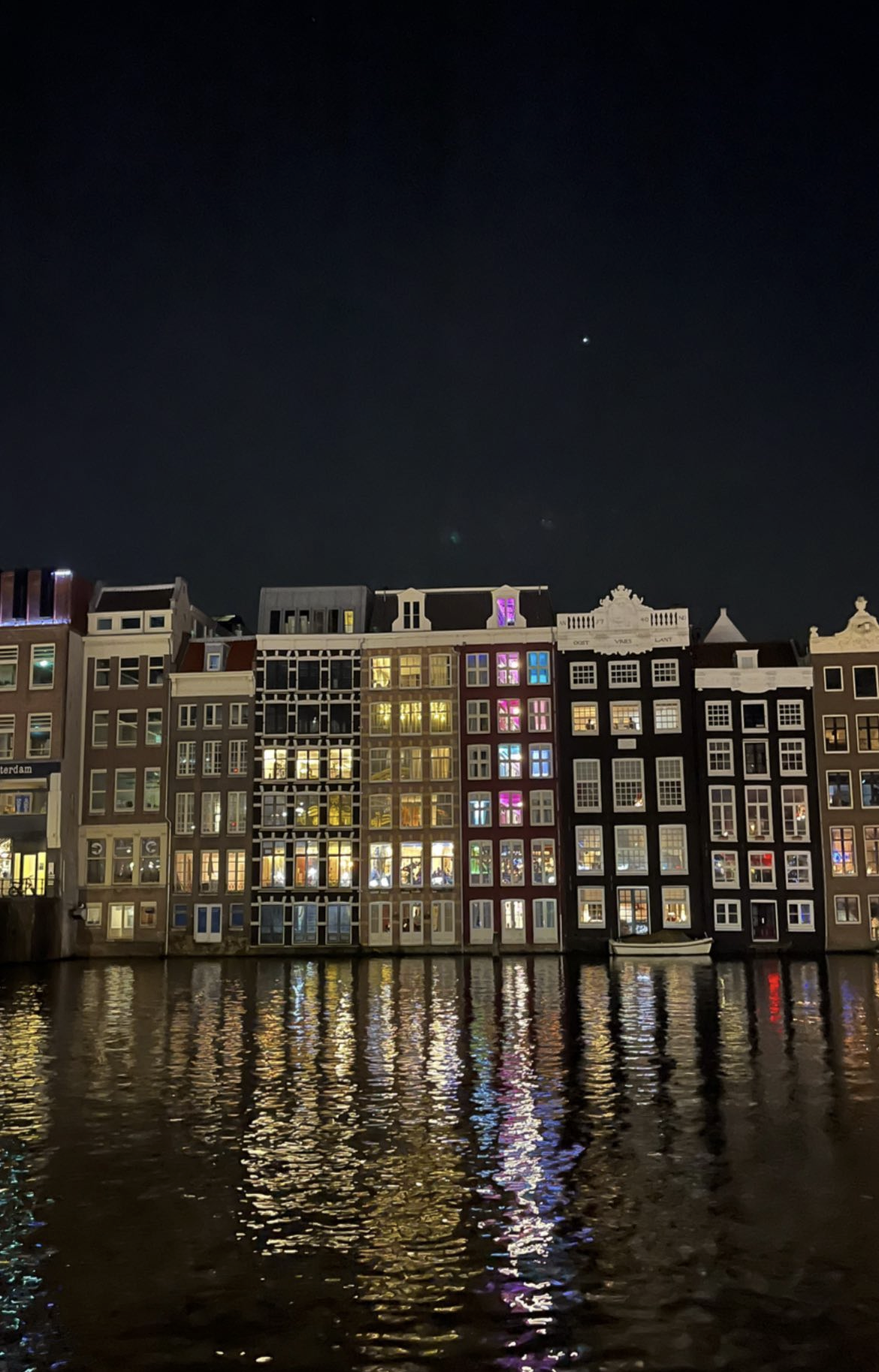
Streets that share
Most streets are split into layers: a tram line, a car lane, a separate bike lane right beside it, and a sidewalk on the edge. Bikes and pedestrians get their own signals, and nearly everyone follows them. Some form of transit is almost always across the street, and one card works on trains, trams, buses and ferries. The Netherlands shows that bikes, cars and trams can work together instead of competing for the same space.
Small details carry history. Off Utrecht's Oudegracht canal, the Zeven Steegjes, seven narrow alleys, survive as one of the city's last working-class neighborhoods. Dordrecht felt less walkable than the cities around it and reminded me of Brooklyn.
Bikes, everywhere
On a rainy fall day in Amsterdam, some riders wore full rain gear and others rode in short sleeves as if the rain were just one more factor. Almost no one carried an umbrella; the wind made it pointless, so umbrellas mostly marked the tourists. I saw babies in front baskets, dogs in crates, couples balancing on one bike, and parking built only for bikes. Locals cross on red when the bike lane is clear. Riding is less a hobby than the default way to move.
Big cities that feel small
Even Amsterdam felt intimate. Strangers sat side by side at shared tables and talked. People noticed when someone looked lost and offered help without being asked, often with a second recommendation on top.
At the Eye Film Museum, visitors moved slowly through Fiona Tan's exhibition, about half a minute at each piece, with no phones out and little talking. In the last room, two older women in bright sweaters joined me on the bean bags to watch her film Island. For five minutes we did nothing at all. The Dutch call it niksen. It fits a country where very few employees work very long hours and most of the day is left for life outside work.
A walk to Delft
I walked to Delft with a friend I had just met, a student from a small town in Germany who plans to become its mayor. He had already worked in public administration and in policing as part of his studies. He talked about how his education gave him room to grow, and how apprenticeships are treated as a real path, not a fallback from university. I was pretty surprised to see young kids play with little supervision, trusted to set their own challenges. Kids seem a lot more autonomous, independent and free. Meaning, I see them doing a lot of things alone with supervision or roaming on their own. I was told that most Dutch neighborhoods are designed so that schools and playgrounds are 5 or 10 minute walk or bike ride from most places. Design for people.