Thinking with or thinking for
When people bring work to an AI model, do they use it to think alongside them or to think for them?
- Role
- Analysis and interactive
- Data
- Anthropic Economic Index
- Methods
- SQL, SQLite in the browser
Question
Most debate about AI and work asks which jobs it will replace. A more personal question sits underneath: when someone hands a task to a model, are they still doing the thinking?
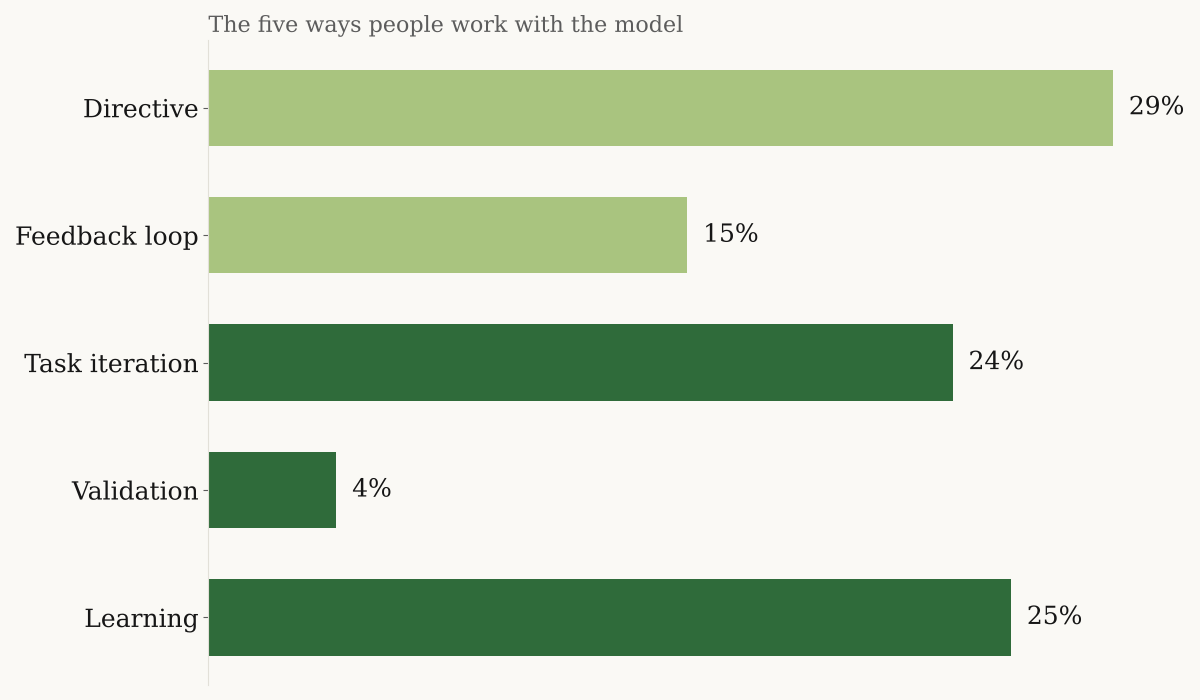
The Anthropic Economic Index labels conversations by how people collaborate with Claude, from directing it to finish a task to iterating and learning with it. That makes the question measurable.
Approach
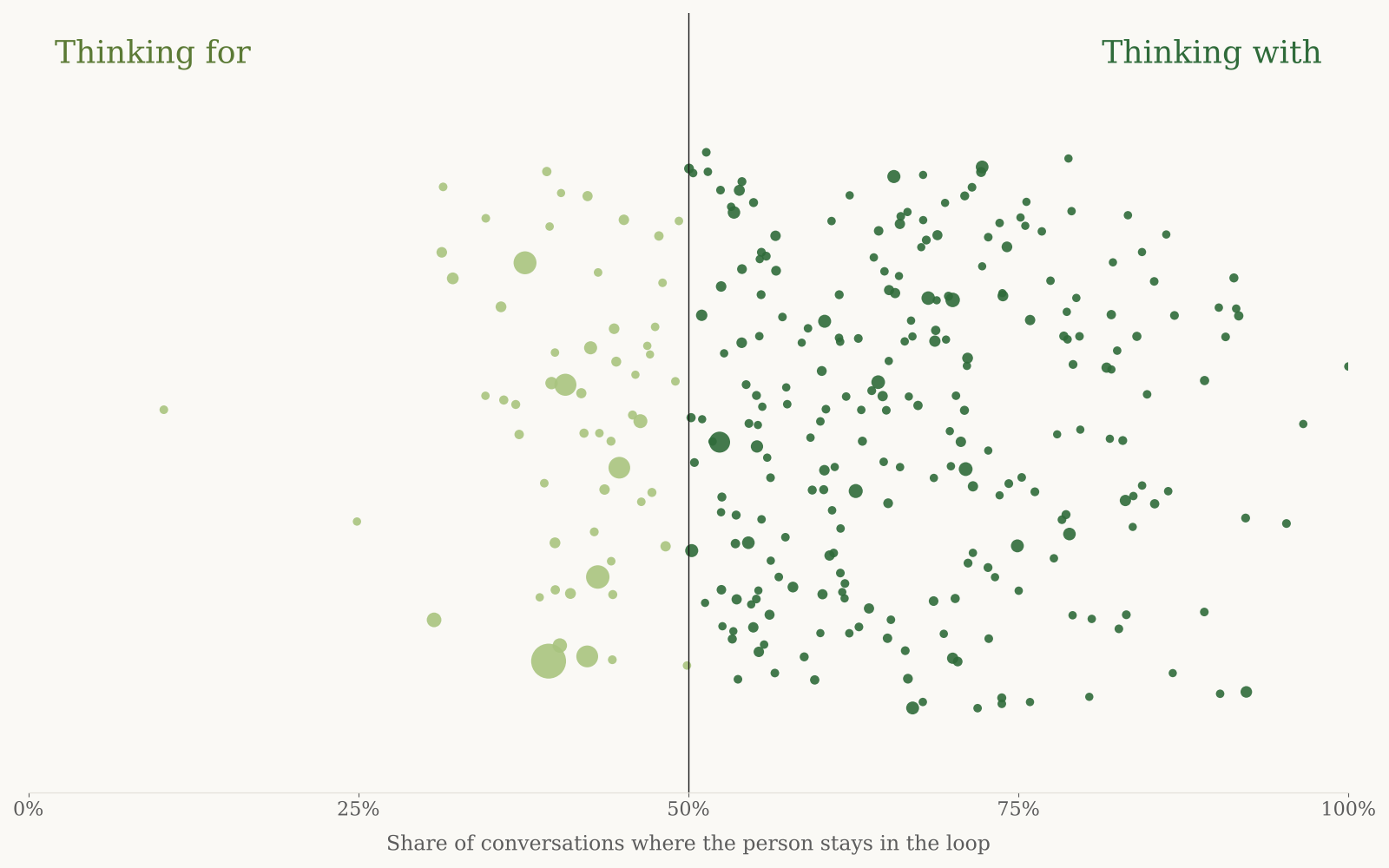
I took the 300 most common tasks in the index, which together cover about 71% of conversations, and matched them to 172 occupations. I grouped the collaboration patterns into two families: thinking with (iterating, learning, checking) and thinking for (directing it, or looping back fixes while it does the work).
The piece doubles as a SQL lab. Readers answer each question themselves with real queries that run in the browser, from a first SELECT to window functions.
Outcome
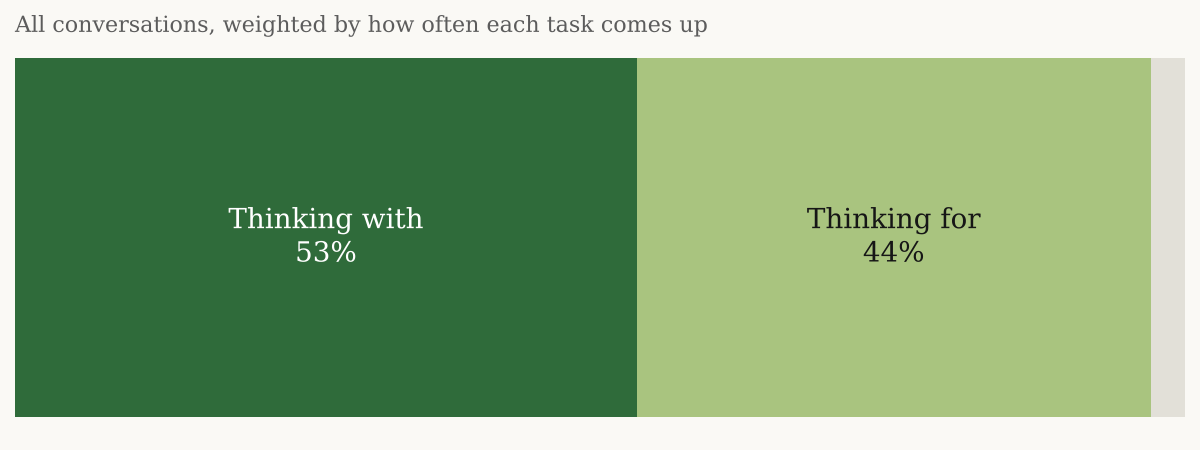
242 of the 300 tasks lean toward thinking with the model, and 58 toward thinking for. Weighted by how often each task comes up, the split is closer: 53% with, 44% for.
The pattern varies by field. Healthcare tasks are learning-heavy, around 53%, while arts and media tasks sit near 6%.